Material Guide
Cork
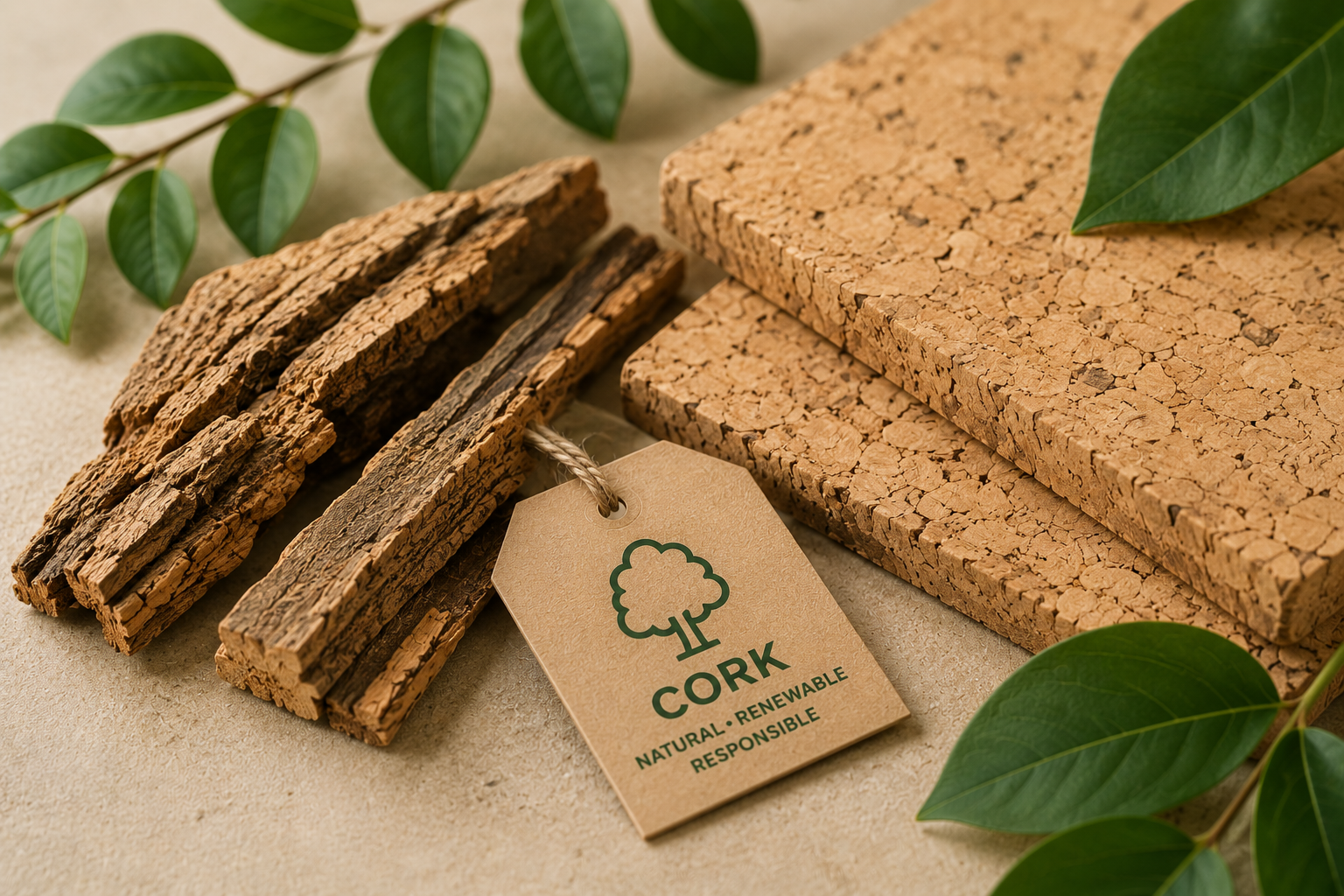
A natural material harvested from the bark of the cork oak tree.
Cork is obtained from the outer bark of the cork oak tree. The bark can be carefully harvested without cutting down the tree and, over time, regenerates, allowing cork to be harvested again. Its distinctive texture, light weight and natural appearance make cork a popular material for promotional merchandise, either as the primary material or as a component of a finished product.
What is Cork?
Cork is a natural material obtained primarily from the bark of the cork oak tree.
Unlike timber harvesting, cork production does not require the tree to be cut down. The outer bark is carefully removed while the tree remains alive, and the bark gradually regenerates.
Once harvested, cork can be processed into sheets, granules and other forms suitable for manufacturing a wide variety of products and components.
Because cork has a naturally varied surface, differences in colour, grain and texture can occur between individual products.
From cork oak to finished material
- 1
Growing
Cork oak trees develop the protective outer bark from which cork is harvested.
- 2
Harvesting
Mature outer bark is carefully removed without cutting down the tree.
- 3
Regeneration
After harvesting, the tree remains alive and grows a new layer of bark over time.
- 4
Processing
Harvested cork is cleaned and processed into forms such as sheets, blocks or granules depending on its intended use.
- 5
New products
The cork material can then be used in products ranging from notebooks and coasters to bags, drinkware details and accessories.
Where you'll find Cork
Cork is a versatile material and can be used either as the main material of a product or as a natural feature combined with other materials.
Office & stationery
Used in notebooks, pens, desk accessories, memo boards and other stationery products.
Home & drinkware
Found in coasters, kitchen accessories and as bases, lids or decorative details on selected drinkware.
Bags & accessories
Cork can be used in bags, wallets, luggage accessories, pouches and other lifestyle products.
Technology & gifting
Cork is also used as a surface or component in selected technology accessories and corporate gifts.
Why consider Cork?
Cork is valued for its natural origin, distinctive appearance and the way the bark can regenerate after harvesting.
It is lightweight and versatile and can provide a natural material element across many different types of promotional merchandise.
However, the presence of cork does not necessarily mean that the entire product is made from cork. Many products combine cork with stainless steel, glass, plastic, textiles, electronics or other materials.
The individual product composition should therefore always be considered when making material or sustainability claims.
How much of the product is Cork?
The amount of cork used can vary significantly between products.
Some items may be predominantly made from cork, while others may use cork only for a lid, base, cover, handle, surface or decorative detail.
For example, a stainless-steel bottle with a cork base should be described as containing a cork component, rather than simply being described as a cork product.
Where material composition information is available, refer to the individual product specifications before making a specific claim.
A cork component should not automatically classify the entire product as being made from cork.
Look beyond the material name
The fact that a product contains cork does not by itself confirm a particular certification, forest-management standard or chain of custody.
Where a supplier provides recognised certification or supporting documentation for an individual product, Ecosource may display that information against the relevant product.
Certification claims should only be made where they are specifically supported for that product.
What about carbon impact?
The material used in a product is only one part of its overall carbon footprint.
Processing, manufacturing, other product components, packaging, decoration, quantity, transport and final destination can all influence the footprint of the finished order.
Where supplier-provided product carbon information is available, Ecosource displays it separately against the relevant product.
Making accurate Cork claims
When presenting a product containing cork to a customer, base claims on the actual composition and supplier information available for that product.
Avoid assuming that:
- the entire product is made from cork because it contains a cork component;
- every cork product carries the same certification;
- cork automatically makes the entire finished product biodegradable;
- a cork component means all other materials in the product are natural or renewable; or
- the use of cork alone determines the overall environmental impact of the finished product.
Where available, use the product's stated material composition, certifications and supporting supplier documentation.
Explore products made with Cork
Discover stationery, drinkware, bags, accessories and promotional merchandise across the Ecosource range made with or containing cork.