
Branding Guide
Sublimation
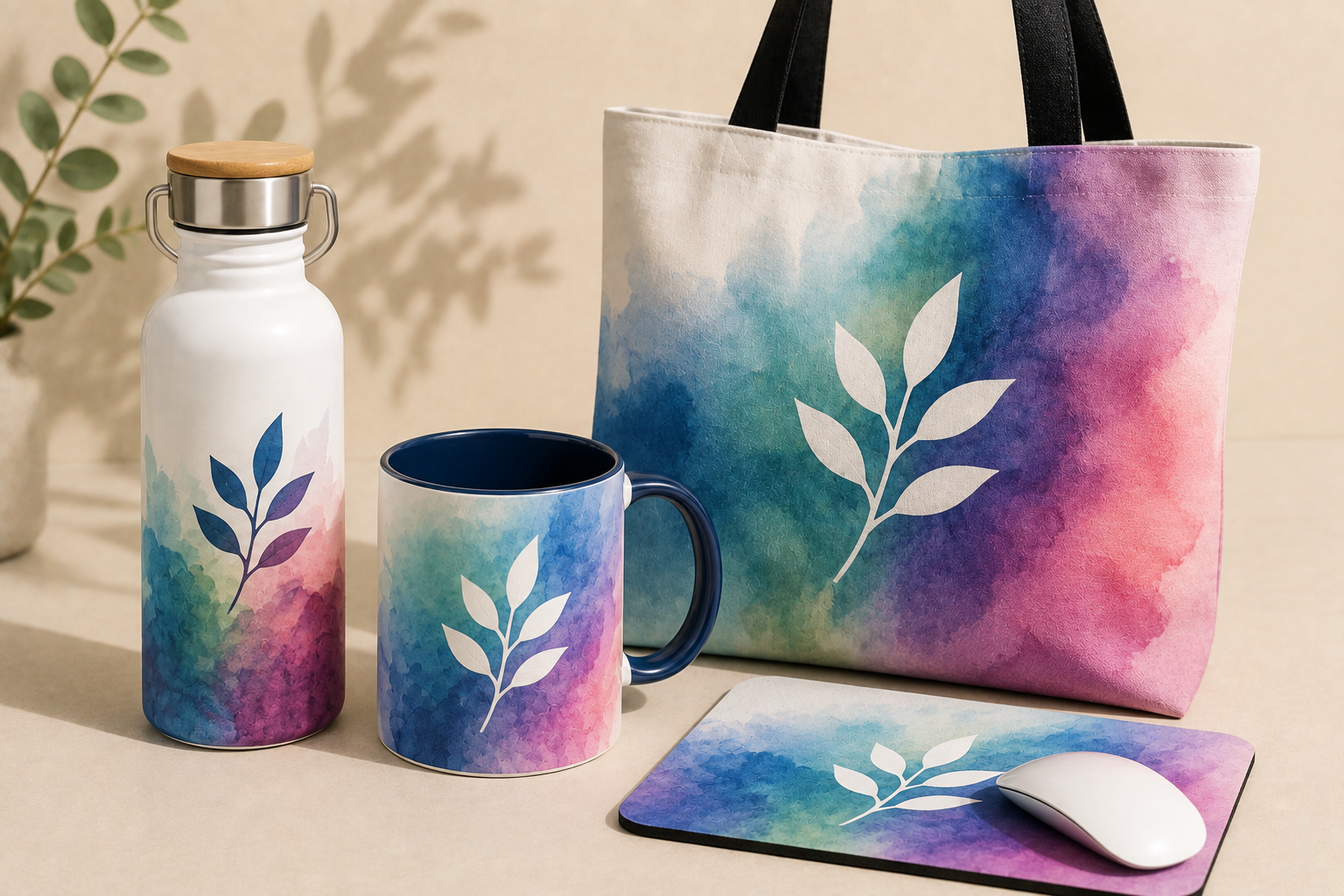
A heat-transfer branding method that produces vibrant, detailed designs by transferring dye into a specially prepared surface.
What is sublimation?
Sublimation uses heat to transfer specially formulated dye into a suitable receptive surface rather than simply applying a layer of ink on top.
The process is particularly effective for detailed, full-colour artwork and can produce a smooth finish where the design becomes part of the receptive surface.
Sublimation is only suitable for products and branding areas specifically designed to accept this process.
How sublimation works
The artwork is first printed using sublimation dyes. Heat and pressure are then used to transfer the design into the suitable product surface.
- 1
Artwork prepared
The digital artwork is prepared at the required size and resolution.
- 2
Transfer printed
The design is printed using sublimation inks onto suitable transfer media.
- 3
Heat applied
The transfer and product are subjected to controlled heat and pressure.
- 4
Design transferred
The dye is transferred into the receptive surface to create the finished branding.
Best for
- Full-colour artwork — Well suited to designs containing multiple colours, gradients and detailed graphics.
- Photographic detail — A good option where the available product and branding area support detailed imagery.
- Vibrant graphics — Can produce strong, colourful results on suitable receptive surfaces.
- Selected specialist products — Particularly useful where the product has been specifically manufactured or coated for sublimation branding.
Benefits
- Full-colour capability — Allows complex artwork containing a broad range of colours to be reproduced.
- Fine detail — Suitable for detailed graphics and photographic-style artwork where supported.
- Smooth finish — Because the dye transfers into the receptive surface, the finished branding does not have the same raised ink feel as some surface-printing methods.
- Excellent visual impact — Particularly effective where vibrant, detailed branding is an important part of the finished product.
Things to consider
- Specialist process — Sublimation is a specialist branding method and is not suitable for every product or material.
- Requires a compatible surface — The product or branding surface must be specifically suitable for the sublimation process.
- Base colour matters — The product surface and base colour can influence the appearance and reproduction of the finished artwork.
- Product-specific branding areas — Available positions and maximum branding areas vary depending on the individual product.
- Check the product options — The available branding methods, positions and print areas are shown on each product page.
Preparing artwork for sublimation
High-quality digital artwork is important because Sublimation can reproduce considerable colour and detail.
Vector artwork is ideal for logos and graphics, while suitable high-resolution raster artwork may be appropriate for photographs and detailed imagery.
Artwork should be supplied at sufficient resolution for the intended branding size.
Unlike spot-colour processes, Sublimation is particularly useful for artwork containing gradients, tonal variation and multiple colours.
Have detailed or full-colour artwork?
Send us your artwork and we'll help determine whether Sublimation is available and appropriate for your chosen product.
Where can my artwork go?
Available Sublimation positions and maximum branding areas vary by product.
Explore products available with Sublimation
Browse promotional products in the Ecosource range that support Sublimation.