
Branding Guide
Debossing
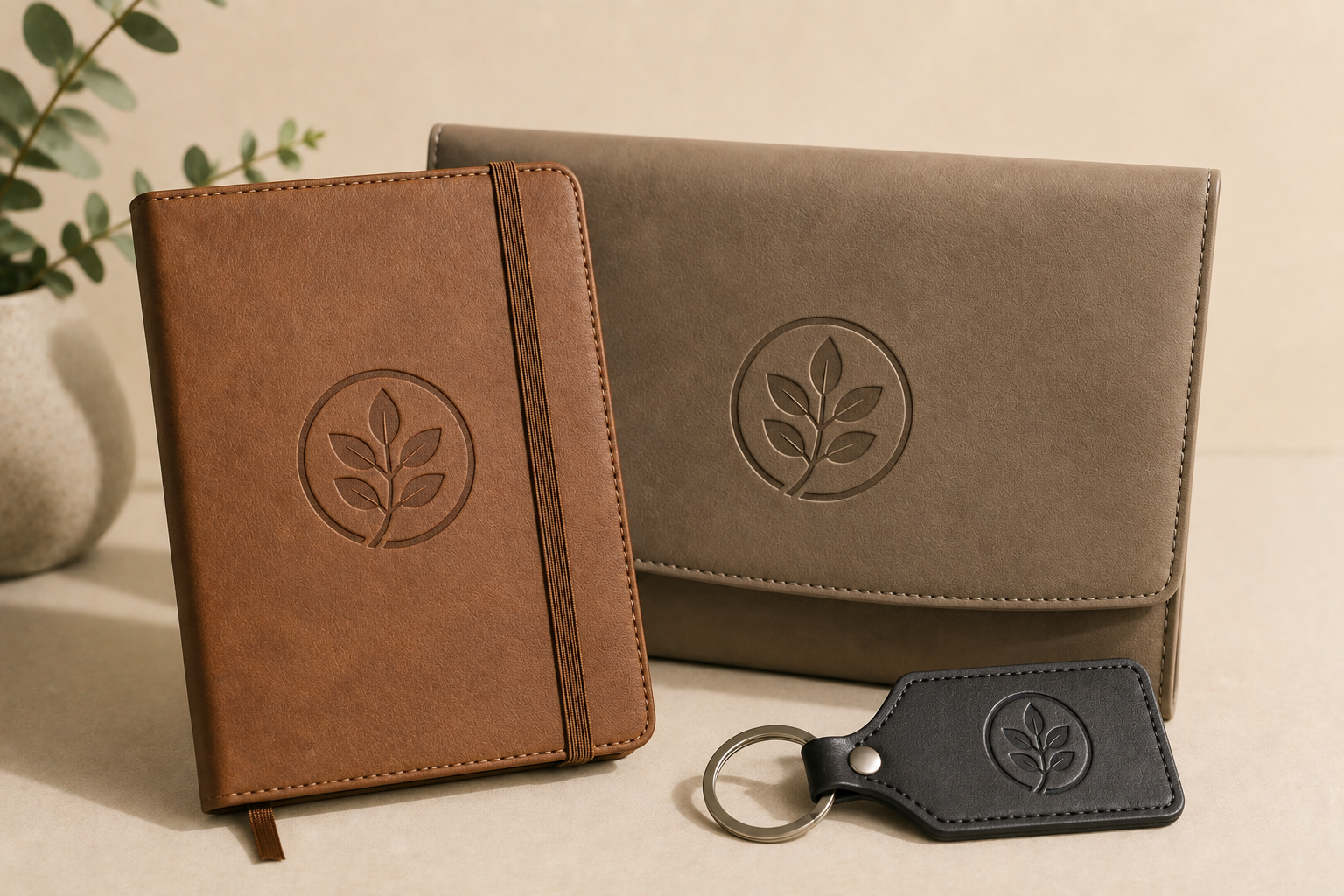
A subtle, premium branding method that presses a logo or design into the product surface to create a permanent recessed impression.
What is debossing?
Debossing creates branding by pressing a custom die into a suitable product surface, leaving the artwork recessed below the surrounding material.
Rather than relying on printed colour, the branding is created through depth, texture and shadow, giving the logo a refined and understated appearance.
It is particularly effective on suitable soft-touch and flexible materials where the impression can be clearly formed.
How debossing works
A die is created from the artwork and aligned with the required branding position. Controlled pressure is then applied to press the design into the product surface.
Depending on the material and process, heat may also be used to help create and retain the impression.
- 1
Artwork prepared
The logo or design is prepared for conversion into a debossing die.
- 2
Die created
A custom die is produced from the artwork.
- 3
Product positioned
The product is aligned beneath the die.
- 4
Impression pressed
Pressure is applied to create the recessed design in the product surface.
Best for
- Premium, understated branding — Ideal where a subtle branded finish is preferred over a prominent printed logo.
- Simple logos & lettering — Strong shapes, clean lettering and uncomplicated artwork generally reproduce particularly well.
- Suitable soft-touch surfaces — Often used on suitable notebooks, covers, wallets, folders, cases and other products capable of retaining an impression.
- Corporate gifting — The subtle tonal finish can work particularly well for premium corporate merchandise.
Benefits
- Premium appearance — Creates a sophisticated branded finish without relying on printed colour.
- Tactile finish — The recessed impression adds physical depth and texture to the product.
- Permanent branding — The artwork is physically impressed into the surface rather than applied as a printed layer.
- Subtle & sophisticated — Particularly useful when the desired result is refined branding rather than strong colour contrast.
Things to consider
- Debossing is not suitable for every product or material. The surface must be capable of accepting and retaining the impression.
- Because traditional debossing relies on depth and shadow rather than printed ink, the logo will generally have a tonal appearance based on the product material itself.
- Very fine details, extremely small text, gradients and photographic artwork may not translate effectively into a physical impression.
- The achievable depth, definition and appearance can also vary depending on the product material.
- Always refer to the individual product's confirmed Debossing option and available branding area.
Preparing artwork for debossing
Clean vector artwork with strong shapes and clear lettering is generally best suited to Debossing.
Because the design is converted into a physical die, very fine lines and small details may need to be simplified.
Traditional Debossing does not reproduce Pantone/PMS colours in the same way as a printed branding method. The finished appearance is primarily created by the impression in the product surface.
Looking for subtle premium branding?
Send us your artwork and we'll help determine whether Debossing is suitable for your chosen product.
Where can my logo go?
Available Debossing positions and maximum branding areas vary by product.
Explore products available with Debossing
Browse promotional products in the Ecosource range that support Debossing.